Related conversion guides: PDF to Google Form · Scanned PDF to Google Form · Word to Google Form
Stop retyping what your firm already wrote
Intake packets, conflict memos, and evaluation worksheets usually start as PDFs or Word files someone approved years ago. Rebuilding them in Google Forms by hand is slow and easy to get wrong across offices.
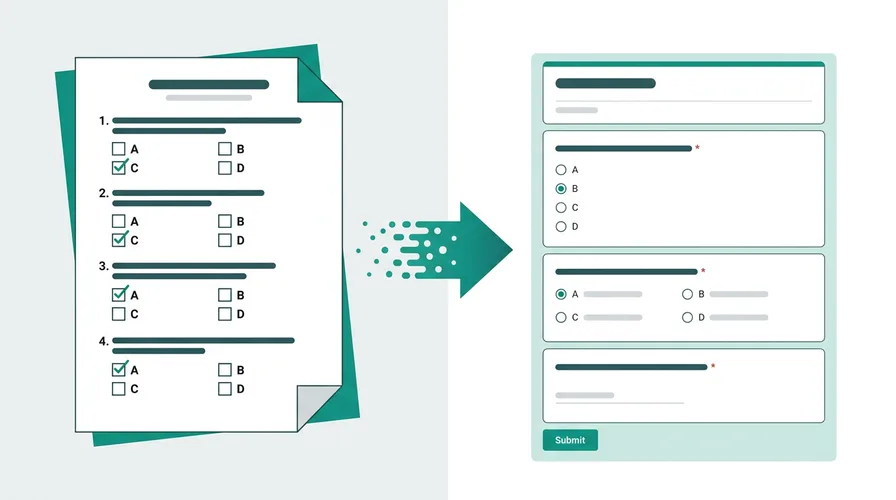
Doc2Form reads the file and drafts a matching Form. Upload PDF or Word up to 5 MB, or use describe mode with a short brief when you have no file. You still own legal accuracy - the tool saves setup time, not judgment on your questions.
Forms live in your Drive, with your workflow
The output is a standard Google Form under your Google account. Responses go to Forms and Sheets like your team already uses. You set who sees the Form and the spreadsheet - same sharing as client folders.
When your caseload spans partners, paralegals, and intake, one converted template duplicates per matter without a separate form host holding your data.
Common questions
Is client information confidential when I use Doc2Form?
You sign in with Google. The upload is used to generate the Form and is not stored afterward like a case repository. Follow your firm policies on PII, privilege, and approved tools. This is not a substitute for IT or ethics review where your rules require it.
Will multi-section intake packets stay organized?
Often yes when headings and structure are clear. Dense scans, odd layouts, or handwriting may need cleanup after conversion.
Which question types come through?
Multiple choice, checkboxes, short answer, paragraphs, and dropdowns usually work when the source is clear. Odd tables or nested logic may need edits in the Form editor.
What does it cost?
The first form is free with no credit card. Paid credit packs are planned for heavier use. The project is open source if your firm prefers to self-host and control the stack end to end.
How do I share the Form with clients?
Like any Google Form: get the share link or send it by email from your usual systems. You control response settings - signed-in users only, one response per person, or anonymous - inside Google Forms before you send anything to clients.