Environmental compliance starts with structured field capture

In the waste and environmental services industry - hauling, recycling (MRF), and landfill operations - the "margin of safety" is decided at 5 AM in the hauling yard. Whether it is a pre-trip vehicle inspection, a hazardous waste manifest helper, or a daily safety tailboard, most haulers rely on multi-page PDF checklists and Word templates that have been vetted by safety officers and city contract managers. The friction occurs when a driver or route supervisor has to manual retype those questions into a blank Google Form on their phone in the middle of a pre-trip walk-around. They often miss critical hydraulic leak checks, skip the PPE attestation, or use different terminology for "contamination" reasons.

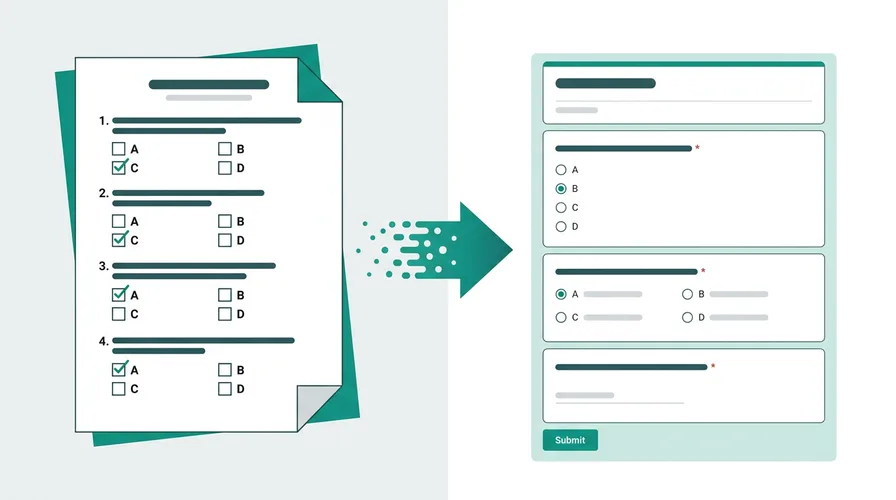
Doc2Form eliminates this "manual retype" by reading your digitally authored PDF or Word templates - up to 5 MB - and drafting a structured Google Form in seconds. This ensures that every driver and every scale-house operator captures data using identical definitions, which is mandatory for maintaining insurance standing, city contract compliance, and regulatory permits. By maintaining the same terminology as the source script, you keep your "field-ready" documentation consistent from the dispatch desk to the landfill face.

Safety and Operations: Route Tailboards and Gate Logs

A safety tailboard or pre-trip inspection is only effective if it is completed before the truck rolls. If a driver has to wait for a physical clipboard to be passed around at the dispatcher desk, the temptation to "pencil whip" the form is high. By moving your tailboards into Google Forms, you can provide a QR code at the fuel island, on the truck dash, or at the yard shack. Drivers can tap through the hazard checks and equipment verifications on their own mobile devices, and you get a real-time record in a Google Sheet.

Importing your existing "Pre-Trip" or "Daily Safety Brief" PDF ensures that you are not missing critical prompts about hydraulic lines, mirror adjustments, lift-gate safety, or weather-specific driving alerts. Once the Form is generated, you can add "File Upload" questions so that drivers can attach a photo of a contamination event, a property damage claim, or a vehicle defect, providing auditable proof that beats a handwritten note in a binder every time. This transparency is vital for defending against claims and proving a robust safety culture to your municipal partners.

Customer Service and Municipal Feedback Loops

Beyond the yard, waste haulers handle a significant volume of customer-facing intake for cart deliveries, bulky item pickups, and recycling audits. If your customer service team or municipal affairs lead uses a Word-based triage script or a resident satisfaction survey, Doc2Form can bring it into Google Forms in seconds. By providing a simple link instead of a PDF attachment, you increase participation rates and get structured data into Sheets that your regional managers can use for quarterly business reviews (QBRs) with the city council.

By digitizing your existing feedback and signup surveys, you maintain consistency in your service history. If your franchise’s post-pickup survey has been using a 10-question PDF for years, importing that same PDF into Google Forms ensures that your longitudinal data on "Missed Pickup Rate" or "CSR Professionalism" remains comparable across different regions. Your data stays in your secure Google Drive, not on a third-party survey platform that might not meet your company's data-governance or municipal-NDA standards.

Common questions

Does this replace our primary routing, billing, or ELD software like AMCS, Rubicon, or Samsara?

No. Doc2Form is a productivity bridge for the "front-line capture" phase. Waste teams use Google Forms for high-volume safety checks, customer surveys, or internal manifest helpers, and then manually export or use API bridges to move key data into their system of record. It's a tool for the "gaps" where your main system might be too rigid or doesn't have a simple, mobile-friendly front end for drivers and residential customers.

Can drivers use the Form offline at remote landfills or transfer stations?

Google Forms generally requires a data connection. We recommend that drivers save the Form as a shortcut on their mobile devices. For areas with zero connectivity, we advise maintaining a paper backup for the immediate safety check and then syncing the data once signal is restored. Most haulers find that LTE coverage is sufficient for the 30-second submission time required for most field forms.

How do we handle official hazardous waste manifests?

Doc2Form does not replace the official, state or provincial-mandated hazardous waste manifest. We recommend using it for "pre-check" or internal tracking purposes that precede the official filing. Your compliance officer and legal team decide what electronic acknowledgments are appropriate for your specific permits and record-retention policies.

Can we collect photos of contaminated loads or damaged carts?

Yes. Once the Form is generated in Google Forms, you can enable "File Upload" questions. This is mandatory for MRF (Material Recovery Facility) operations where you need the gate-house operator to attach evidence of a contaminated load before the customer is rebilled or the load is rejected. Photos land in a secure folder in your Google Drive, linked to the manifest response.
What is the cost for a regional hauler or multi-site MRF?

Your first hosted conversion is free, allowing you to test your most complex safety checklist. For firms managing multiple facilities or a large library of SOPs across different franchise areas, we offer credit packs. The codebase is also open source for organizations that prefer to host the tool on their own private Workspace infrastructure to meet strict corporate-governance or municipal-contract rules.