Creative velocity begins with structured briefing

In the high-pressure world of advertising, media buying, and in-house brand management, the "margin of error" is decided during the kickoff. Whether it is a creative brief for a global campaign launch or a media-planning worksheet for a regional buy, most agencies rely on multi-page PDF briefs and Word templates that have been refined by strategy and traffic teams. The friction starts when an account manager has to manually retype those "audience personas," "legal mandatories," or "brand guardrails" into a Google Form for the creative team. They often miss critical details like asset dimensions, proofing requirements, or client-mandated "do-not-use" keywords, leading to expensive post-production revisions and missed flight dates.

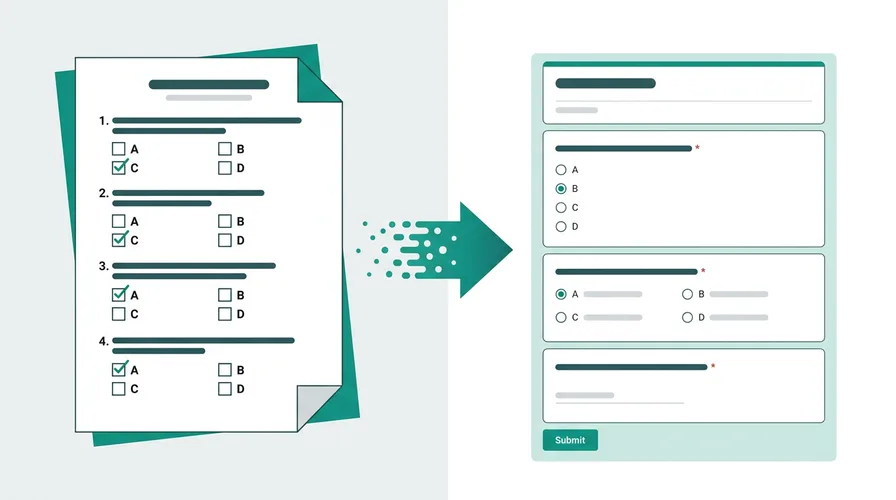
Doc2Form eliminates this "briefing drift" by reading your approved PDF or Word templates - up to 5 MB - and drafting a structured Google Form in seconds. This ensures that every producer, strategist, and creative sees the exact same prompts the client and account team approved, which is mandatory for maintaining brand integrity and avoiding "mis-briefs" that burn agency hours. By maintaining the same terminology as the source script, you keep your "campaign-ready" documentation consistent from the pitch to the post-mortem.

Media Operations: Planning, Channel Intakes, and Pacing

Media planning is a game of precision and rapid iteration. If a planner has to "freestyle" a channel request because the official Excel-based template is too complex or undergoing a version update, the result is often a buy that misses key geo-targets, dayparting rules, or KPI goals. Most teams maintain these planning "grids" as internal PDFs or spreadsheets. By moving your grids into Google Forms, you can provide a structured interface for planners to submit their requirements right from their browser.

Importing your existing "Media Plan" or "Channel Worksheet" PDF ensures that you are not missing critical prompts about budget splits, audience segments, or third-party tracking tags. Once the Form is generated, you can add "File Upload" questions so that planners can attach a flowchart or a competitive tear-sheet directly to the intake. The data lands in a central Google Sheet that your traffic team can use to trend channel performance and track budget pacing in real-time, providing an auditable trail for "client-ready" reporting without the need for a complex proprietary media-buying suite.

New Business and Client Feedback Loops

The relationship with a client does not end when the campaign goes live or the pitch is won. Top-tier agencies use post-engagement surveys and post-mortems to track satisfaction, campaign ROI, and team performance. If your account-service manual has a standard set of feedback questions or a campaign retro instrument, you can convert that Word template into a Google Form in seconds. By sending a simple link instead of a PDF attachment, you increase response rates from busy CMOs and get structured data into Sheets that your leadership can use for agency-wide quality improvement.

By digitizing your existing intake and feedback surveys, you maintain consistency in your client history. If your firm’s "Annual Client Review" has been using a 10-question PDF for years, importing that same PDF into Google Forms ensures that your longitudinal data on "Likelihood to Renew" remains comparable as you scale. Your data stays in your secure Google Drive, not on a third-party survey platform that might not meet your company's strict data-governance or client-NDA standards. This approach is particularly useful for managing holding-company compliance and "new business" discovery where speed and structure are paramount.

Common questions

Does this replace our primary Project Management tool like Asana, Monday, or Workamajig?

No. Doc2Form is a productivity bridge for the "early discovery" and "specific feedback" phases. Advertising teams use Google Forms for fast, client-facing briefs, internal retros, or assistant audits, and then manually export or use API bridges to move high-value data into their system of record. It's a tool for the "gaps" where your main system might be too rigid or doesn't have a simple, external-facing portal for freelancers.

Can clients upload brand guidelines or large assets directly through the Form?

Yes. Once the Form is generated in Google Forms, you can add "File Upload" questions. This is mandatory for new-business intake and creative discovery where you need the client to attach a style guide, a high-res logo, or a sample video before the strategy team starts the pitch. Files land in a secure folder in your Google Drive, linked to the client's intake response.

How do we handle NDAs and sensitive client campaign data?

Because the Forms live in your own agency's Google Workspace tenancy, you maintain full control over data residency and access. We strongly recommend including your firm’s standard non-disclosure agreement (NDA) and data processing links in the Form description. We also advise against collecting highly sensitive "vault" data like credit card numbers or raw PII in plain-text Forms unless your Workspace security has been specifically hardened for that workload.

Can we use "Describe mode" for a flash brainstorm or slogan poll?

Absolutely. If you need a fast answer on a campaign tagline or a holiday party date, you can type "3-question survey about [Topic] with tagline checkboxes and reason paragraph" into Describe mode. Doc2Form will generate the structure so you can get a live link out to your Slack channel or creative team in seconds.
What is the cost for a multi-office agency or holding-company group?

Your first hosted conversion is free, allowing you to test your most complex creative brief. For firms managing dozens of regional intakes and QBR surveys across multiple departments, we offer credit packs. The codebase is also open source for firms that prefer to host the tool on their own private developer infrastructure to meet strict corporate-governance or client-NDA rules.