Firm profitability begins with structured engagement discovery

In the world of professional services - management consulting, accounting, architecture, and high-end agency work - the "margin of error" is decided during the discovery phase. If a partner takes a vague verbal scope or if an account lead uses an outdated intake template, the project team will build a Level of Effort (LOE) or Fee Letter based on flawed assumptions. Most firms have standard "Client Onboarding," "Engagement Scoping," or "Conflict of Interest" Word documents that have been refined by practice heads and risk officers over decades. The friction occurs when you need a fast, digital way for a prospect or a client to answer those questions without retyping the entire SOW (Statement of Work) appendix.

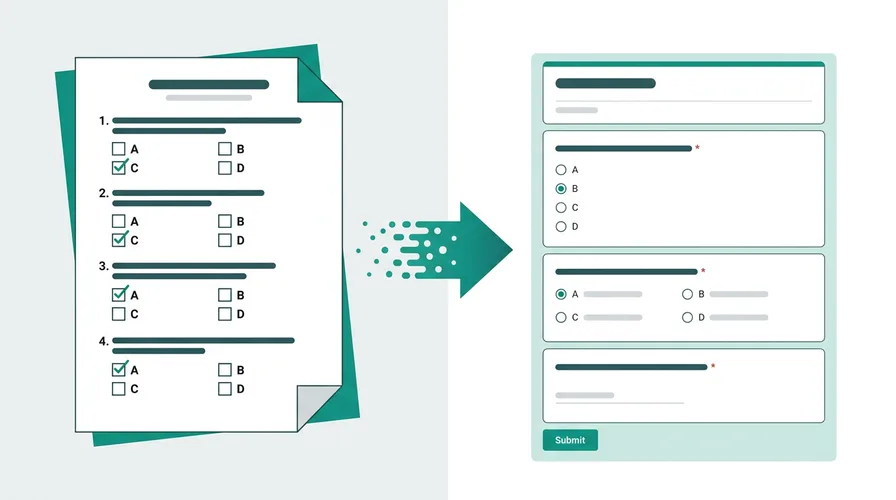
Doc2Form eliminates this "manual friction" by reading your digitally authored PDF or Word templates - up to 5 MB - and drafting a structured Google Form in seconds. This ensures that every practice and every partner uses identical terminology for conflict checks, risk flags, and data-handling requirements. By maintaining the same terminology as the source script, you ensure that the questions about stakeholder maps, budget ranges, or technical constraints are identical to the ones your delivery team will act on during the engagement.

Risk Management: Independence, Ethics, and Compliance Attestations

Maintaining a stable and reputable firm requires consistent auditing of partner independence, gift disclosures, and annual compliance declarations. If your risk manual or HR policy has dozens of attestation questions - from "Outside Directorships" and "Political Contributions" to "Confidentiality Awareness" and "Data Privacy Reps" - retyping those into a Google Form manually is an invitation for "complacent entry," where staff skip sections that are hard to type. By importing the official policy PDF directly, you ensure that every attestation maps exactly to your firm's global standard.

You can also use Google Forms to manage periodic engagement feedback and project post-mortems. By starting with a canonical quality-control PDF, you can organize the Form with Likert scales for "Communication," "Technical Excellence," and "Value for Fees." The responses land in a linked Google Sheet where you can run Pivot Tables to trend fee-earner performance by practice area, office, or matter type, without the need for an expensive enterprise survey suite. This transparency is vital for identifying top performers and training gaps during annual reviews.

Alliance Networks and Subcontractor Onboarding Loops

Managing a network of alliance partners, fractional subcontractors, or "joint venture" staff requires consistent intake of capability statements, insurance certificates (COI), and data-processing agreements (DPA). Instead of managing a flood of email attachments in a general partnership or procurement inbox, you can convert your subcontractor onboarding packet into a structured Google Form. By having partners upload their professional liability certificates and security reps directly into the Form, your operations team gets a single, auditable folder in Google Drive for the entire network.

This approach is particularly useful for managing multi-disciplinary intakes where one practice lead might need specialized "Technical Requirements" that another practice doesn't. You can use Google Forms' "Go to section based on answer" logic to route different matter types to the right subset of questions, all while keeping the "Entity Details" and "Billing Contacts" standardized for the firm’s central finance office. Your data stays in your secure Google Drive, not on a third-party platform that might not meet your firm's strict client-NDA or attorney-client privilege standards.

Common questions

Does this replace our primary practice management system like Intapp, Deltek, or SAP?

No. Doc2Form is a productivity bridge for the "capture" and "survey" phases that precede or follow the formal matter opening. Professional services firms use Google Forms for fast, client-facing intakes, internal risk audits, or subcontractor pulses, and then manually export or use API bridges to move key data into their system of record. It's a tool for the "gaps" where your main system might be too rigid or doesn't have a simple, external-facing portal for non-employees.

Can clients upload tax documents or architectural plans directly through the Form?

Yes. Once the Form is generated in Google Forms, you can add "File Upload" questions. This is mandatory for engagement intake and discovery where you need the client to attach evidence of their current financial position, a site plan, or an org chart before the proposal is finalized. Files land in a secure folder in your Google Drive, linked to the client's intake response.

How do we handle client privilege and highly sensitive PII?

Because the Forms live in your own firm's Google Workspace tenancy, you maintain full control over data residency and access. We strongly recommend including your firm’s standard non-disclosure agreement (NDA) and data processing links in the Form description. We also advise against collecting highly sensitive "vault" data like social security numbers or bank account passwords in plain-text Forms unless your Workspace security has been specifically hardened for that workload.

Can we use "Describe mode" for a quick scoping call or discovery?

Absolutely. If a client calls with a rush project and you do not have a PDF master yet, you can type "10-question discovery for HR audit with employee count, union/non-union dropdown, and target deadline date" into Describe mode. Doc2Form will generate the structure so you can get a Form link out to the client before the kickoff call ends.
What is the cost for a multi-disciplinary firm or holding-company network?

Your first hosted conversion is free, allowing you to test your most complex client intake. For firms that need to digitize large libraries of practice-specific checklists and risk questionnaires across multiple offices, we offer credit packs. The codebase is also open source for firms that prefer to host the tool on their own private developer infrastructure to meet strict corporate-governance or client-NDA rules.